

The city’s transformation is being driven primarily by the operationalisation and continued expansion of the Delhi–Meerut Regional Rapid Transit System (RRTS), which has significantly reduced travel time by approximately 40 minutes between Ghaziabad and key economic centres, including Delhi. Simultaneously, the widening of National Highway-24, enhanced expressway connectivity and improved access to Noida and Gurugram have strengthened regional mobility. These developments have shifted the perception of Ghaziabad from a distant suburb to a well-connected urban centre within the expanding footprint of the NCR.
The improvement in connectivity is also reflected in the city’s residential market performance. According to Anarock, Ghaziabad accounted for approximately 16 percent of the NCR’s residential sales during the first quarter of 2026. The city also recorded a 40 percent year-on-year increase in residential absorption, demonstrating sustained buyer confidence despite short-term market moderation.
As commuting becomes easier, new residential clusters are emerging across key locations. Homebuyers are increasingly recognising the opportunity to purchase spacious, modern homes without relocating far from Delhi. The city’s development trajectory reflects steady and sustainable growth, with long-term value being created through planned expansion rather than rapid speculation.
Several micro-markets are now establishing themselves as Ghaziabad’s principal growth corridors. Siddharth Vihar and Raj Nagar Extension have benefited from their strategic proximity to the expanding highway network, while Wave City has introduced new standards of urban planning through integrated infrastructure. Established residential areas such as Indirapuram and Vaishali continue to witness strong demand because of their developed social infrastructure, metro connectivity and close proximity to Delhi.
The growing confidence in Ghaziabad’s housing market is also evident in the increasing participation of leading real estate developers. According to ANAROCK Research’s first quarter 2026 report, Ghaziabad accounted for nearly 10 percent of all residential launches across the NCR, representing approximately 16,000 housing units during the quarter. The city also registered an impressive 132 percent quarter-on-quarter increase in new residential supply. Prominent developers, including Gaurs Group, Prateek Group, Saya Group and County Group, are introducing a new generation of premium and luxury residential projects that are raising benchmarks in architecture, amenities and lifestyle standards.
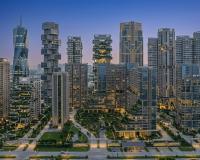
Among these developments, Prateek Grand Begonia in Siddharth Vihar represents the evolving residential landscape by offering an integrated community with modern infrastructure, expansive green spaces and luxury living. The project reflects the changing preferences of contemporary homebuyers, who increasingly seek larger homes, sophisticated design and amenities that support a complete and balanced lifestyle. Such developments demonstrate that residential value now extends beyond the home itself to the overall living experience offered within a planned community.
Backed by expanding connectivity, large-scale infrastructure development and rising demand for premium housing, Ghaziabad is steadily positioning itself as one of the preferred destinations for homebuyers and real estate investors across the National Capital Region. With continuous progress in transport infrastructure and the emergence of high-quality residential developments, the city is expected to become one of the biggest beneficiaries of the region’s infrastructure-led growth.
About The Author










Comment List